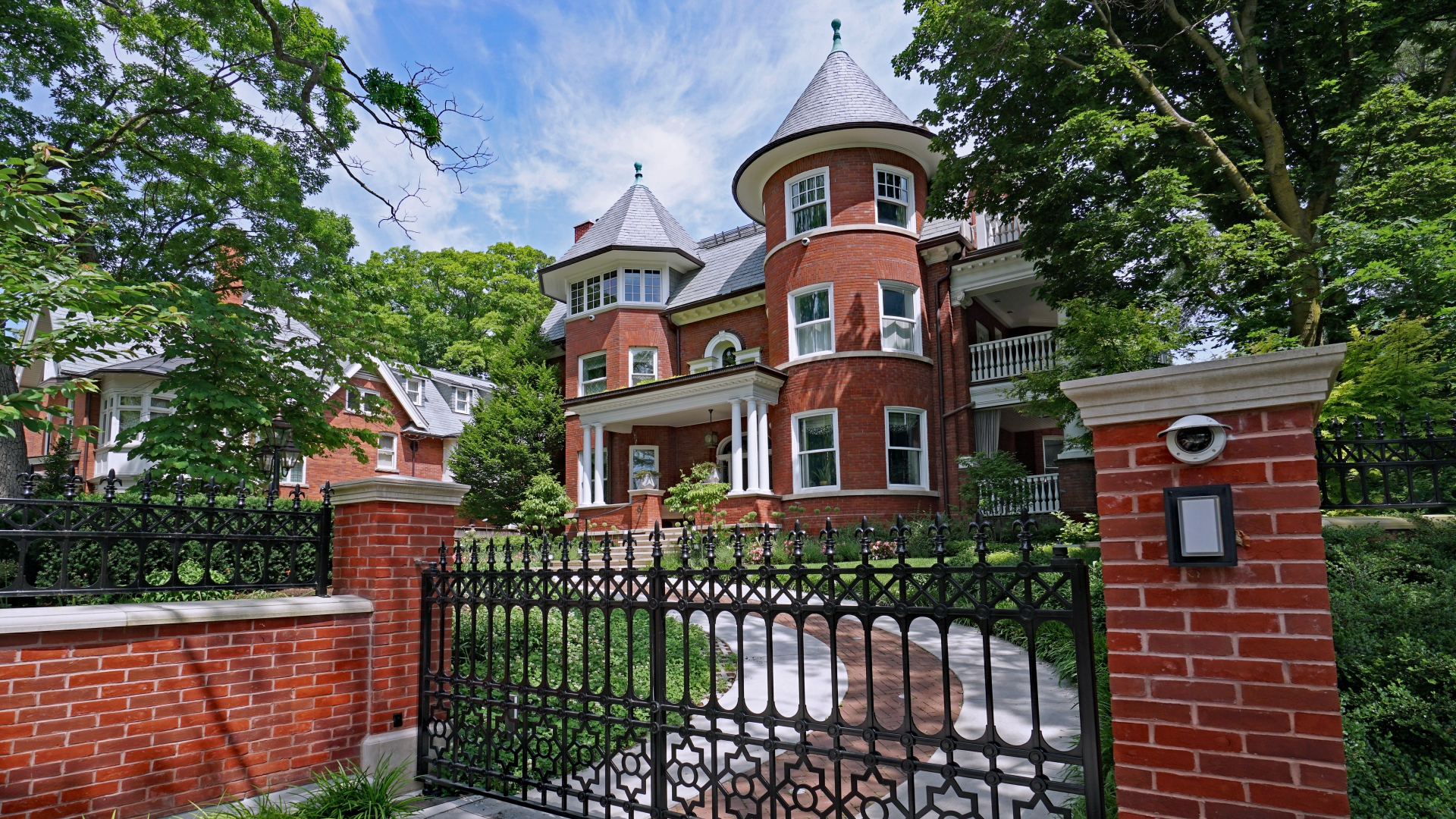
Why You Can’t Recreate Rosedale
The GTA has no shortage of new luxury homes. With the time and money that modern developers have, almost anything that can be imagined can be built: limestone facades, soaring ceilings, intricate millwork, dramatic kitchens, indoor pools and elaborate outdoor spaces. While those things are beautiful and important, we all know it can be the other things that make a home and neighbourhood special, the things that even the most ambitious developers cannot replicate.
You can’t make seedlings grow into a mature canopy of trees overnight. You can’t replicate the way a street has developed over more than a century. You can’t manufacture the relationship between a house, its garden, its neighbours and the landscape around it. This is part of the reason why we say communities like Rosedale are nearly impossible to recreate.
The appeal of the neighbourhood is not contained within any one house, but in its accumulated character, shaped over generations by its architecture, landscape and setting. For buyers drawn to historic homes with timeless bones, that sense of permanence can be just as important as what is inside the front door.
The House Is Only Part of the Property
Sometimes, when people look at a century-old home, people focus on what needs to be changed, which is a completely fair and natural thing to do. Maybe the kitchen is dated, or the bathrooms need work. The floor plan might not suit contemporary life, and maybe the windows, mechanical systems and insulation may all require attention. But, the thing is, these are all things that are easily replaced, all the things that are difficult to replace – or are straight up unreplaceable – are often already there. Plus, those previously mentioned “issues” are only your project if you’re in the house for a fixer-upper, there are plenty of freshly renovated older houses.
One of the biggest appeals in older homes is their proportions, with many boasting luxuries that are difficult to reproduce in modern construction, like: generous ceiling heights, unusually large windows, formal rooms and carefully considered transitions between spaces. Many of these home’s finishes have been selected and crafted with an expectation that the house would last for generations.
Even the imperfections can contribute to a sense of authenticity. A new home can borrow the vocabulary of traditional architecture, but it cannot instantly acquire the history behind it.
Then There Is the Lot
Possibly the biggest advantage of living in an established neighbourhood is what surrounds the house.
When Toronto’s older luxury neighbourhoods were being developed, land was treated differently than it is today. First of all, depending on the neighbourhood, your location literally could not get better because it was among the first areas developed. But all of them feature larger lots, mature landscaping, generous setbacks and winding streets, creating a sense of space that would be extremely difficult to reproduce within the constraints of a modern development.
The value of that land goes beyond its size. Aspects like a mature garden provide privacy that a newly planted landscape cannot. Large trees change the light inside a home, frame views and create a relationship between the house and its surroundings. A property can feel secluded even while being minutes from the centre of the city. These are qualities that cannot simply be added during a renovation.
A Neighbourhood Takes Generations to Build
This is perhaps the most important distinction to make: a neighbourhood is so much more than a collection of houses next to each other.
When you look at historic GTA neighbourhoods like Rosedale, Forest Hill, or Lawrence Park, the character comes from the relationship between its homes, streets, ravines, trees and landscape. Over the decades in these neighbourhoods, individual properties have changed hands, been renovated, rebuilt and landscaped. Trees have grown. Gardens have matured. Streetscapes have evolved. The result is an irreplicable thumbprint of a thriving neighbourhood that feels cohesive without being uniform. That kind of character cannot be manufactured all at once.
Brand new subdivisions pop up all that time, some are even designed to look established from day one, but there is a difference between creating the appearance of maturity and allowing a place to acquire it naturally over generations.
Why Older Homes Continue to Attract Buyers
There are two important distinctions to make here. 1. “Old” does not mean run down, not modern, or boring. And 2. Just because we see older homes continuing to attract new buyers does not mean older homes are inherently better than new ones.
A new-build can offer advantages that an older property may not without renovations: modern mechanical systems, contemporary layouts, energy efficiency, integrated technology and the ability to design almost everything around the needs of the owner.
If you’re a buyer that needs that flexibility, there is absolutely nothing wrong with new-builds. But more and more, buyers are attracted to older homes for precisely what cannot be ordered from an architect's plans.
There is a particular appeal in buying something with an existing sense of place and then making it your own. A thoughtful renovation can bring a historic home into contemporary life without stripping away the qualities that made it desirable in the first place.
The Luxury of What Cannot Be Replaced
This is ultimately why established neighbourhoods continue to hold such appeal.
Luxury is often associated with what can be added: another amenity, another room, another finish or another technological feature. But some of the most valuable qualities in a home are the ones that cannot be purchased separately or attained immediately.
Privacy, mature trees, architectural character, a stunning setting, a generous lot, a beautiful street, and neighbourhood with a history cannot be bought.
You can renovate a house. You can redesign a garden. You can update every finish from the front door to the basement, but you cannot fast-forward 100 years.
And that’s why time is one of the most enduring luxuries of all.

