Why the Best Backyards Are Designed Like Living Rooms
There is a point every spring when the backyard stops being something you look at and starts becoming somewhere you go.
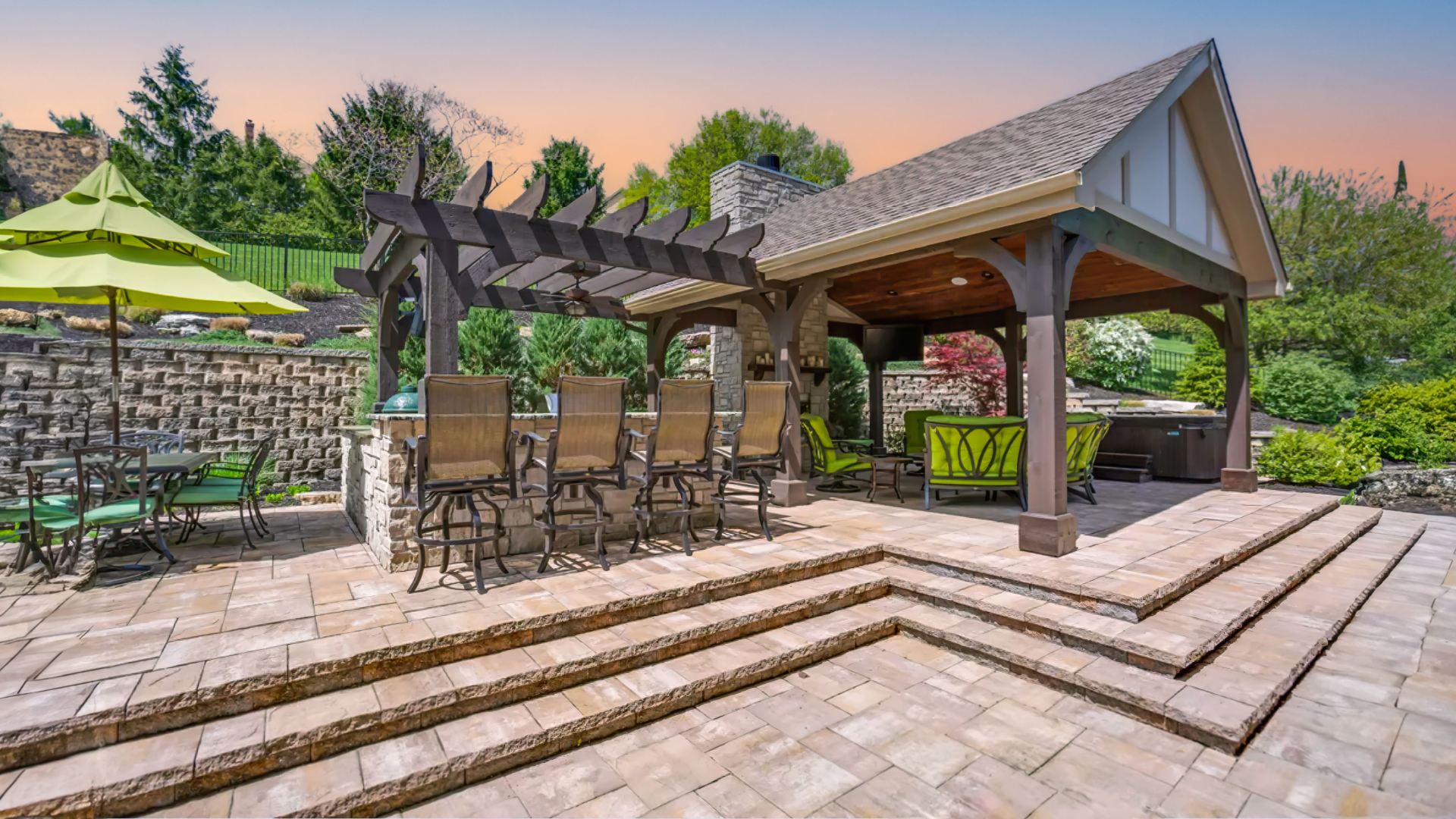
It usually happens without much planning. The temperature holds just long enough, the sun lingers a little later, and suddenly a door that stayed shut all winter is open for most of the day. What was once a boundary becomes a threshold. The way people use their homes shifts almost immediately. And the backyards that feel the most natural in that moment tend to share something in common. They are not treated as outdoor space in the traditional sense. They are designed like living rooms.
Not in appearance, necessarily, but in how they function.
It Starts With Layout
The biggest difference between a backyard that gets used and one that doesn’t often comes down to how it’s arranged.
Open space on its own rarely invites people to stay. It looks clean, but it doesn’t suggest what to do with it. The best backyards are broken into zones in a way that feels subtle but intentional. A seating area that naturally gathers people. A dining space that feels separate without being far. A quiet corner that catches the last of the evening light. Indoors, this kind of layout is second nature. No one questions where to sit in a well-designed living room. Outside, the same principle applies, but it is often overlooked.
When it is done properly, people move through the space without thinking about it.
Comfort Changes Everything
Furniture is where most outdoor spaces fall short.
There is a tendency to treat it as temporary or secondary, something that looks good but is not meant to be used for long. The difference at the high end is immediate. Deeper seating, better materials, pieces that hold their shape and actually invite you to stay for more than a few minutes. The goal is not to replicate an indoor living room, but to bring the same level of comfort outside. Once that threshold is crossed, the space starts to behave differently. Conversations last longer. People settle in rather than rotate through.
Even small details matter more than expected. The height of a table, the angle of a chair, the placement of a cushion. These are the things that determine whether a space is used once or becomes part of a daily routine.
The Role of Light
Lighting tends to define how long a backyard lives each day.
During the afternoon, natural light does most of the work. By evening, the atmosphere depends entirely on how the space is lit. Overhead lighting can feel harsh and temporary, like something set up for a single occasion. Layered lighting, placed lower and closer to where people actually sit, changes the tone completely. Soft lighting around seating areas, subtle illumination along pathways, and a focal point like a fire feature can extend the use of a space well into the night. It stops feeling like an outdoor area and starts to feel like a continuation of the home.
Flow Matters More Than Size
A large backyard does not guarantee a better experience.
What matters more is how easily it connects to the house. Wide openings, level transitions, and sightlines that carry from inside to outside make a significant difference. When that connection feels effortless, the backyard becomes part of the home rather than something separate from it. This is especially noticeable in early spring, when the weather is just warm enough to go outside, but not warm enough to commit to it fully. Spaces that allow for easy movement between indoors and outdoors tend to get used first.
A Shift in How Space Is Valued
Backyards have changed over time. They were once seen as seasonal, used occasionally and often left undefined. Now, they are expected to carry the same weight as interior spaces.
The best ones do not try too hard. They feel natural, lived-in, and ready without needing to be arranged each time. They support everything from a quiet morning coffee to a full evening of entertaining, without needing to change form. As the weather continues to warm, those are the spaces people are drawn to first. Not because they are outside, but because they feel complete.
And when that happens, the line between indoors and outdoors starts to disappear in a way that feels easy, not designed.

