Why Home Wellness Spaces Are Becoming Essential - and How Far They Can Go
From spa-like bathrooms to full private recovery suites, wellness at home is no longer an afterthought.
Luxury used to mean proximity to the best hotels, private clubs, and destination spas. Increasingly, it means bringing those experiences home.
Across the upper tiers of the market, dedicated wellness spaces are no longer tucked discreetly beside a basement gym. They are part of the architectural conversation from the outset. Buyers are asking for environments that support longevity, recovery, and mental clarity. Not as indulgences, but as daily infrastructure.
The modern home wellness space now exists on a spectrum.
The Foundation: A Bathroom That Feels Restorative
At its most accessible level, wellness begins in the primary suite.
A properly designed bathroom can function as a private retreat without expanding a home’s footprint. Deep soaker tubs positioned near natural light. Walk-in rainfall showers with steam capability. Heated floors. Thoughtfully layered lighting that shifts from bright morning clarity to softer evening tones.
Materiality matters here. Natural stone, warm wood accents, and subtle hardware choices do more than elevate aesthetics. They create sensory calm. When proportioned correctly, even a single room can replicate the feeling of a boutique spa.
For many homeowners, this is the minimum standard.
Add a small but purposeful fitness area nearby, perhaps free weights, a Peloton, or dedicated yoga space, and the foundation of daily wellness is already in place.
The Integrated Level: Gym Meets Recovery
The next tier moves beyond aesthetics and into performance.
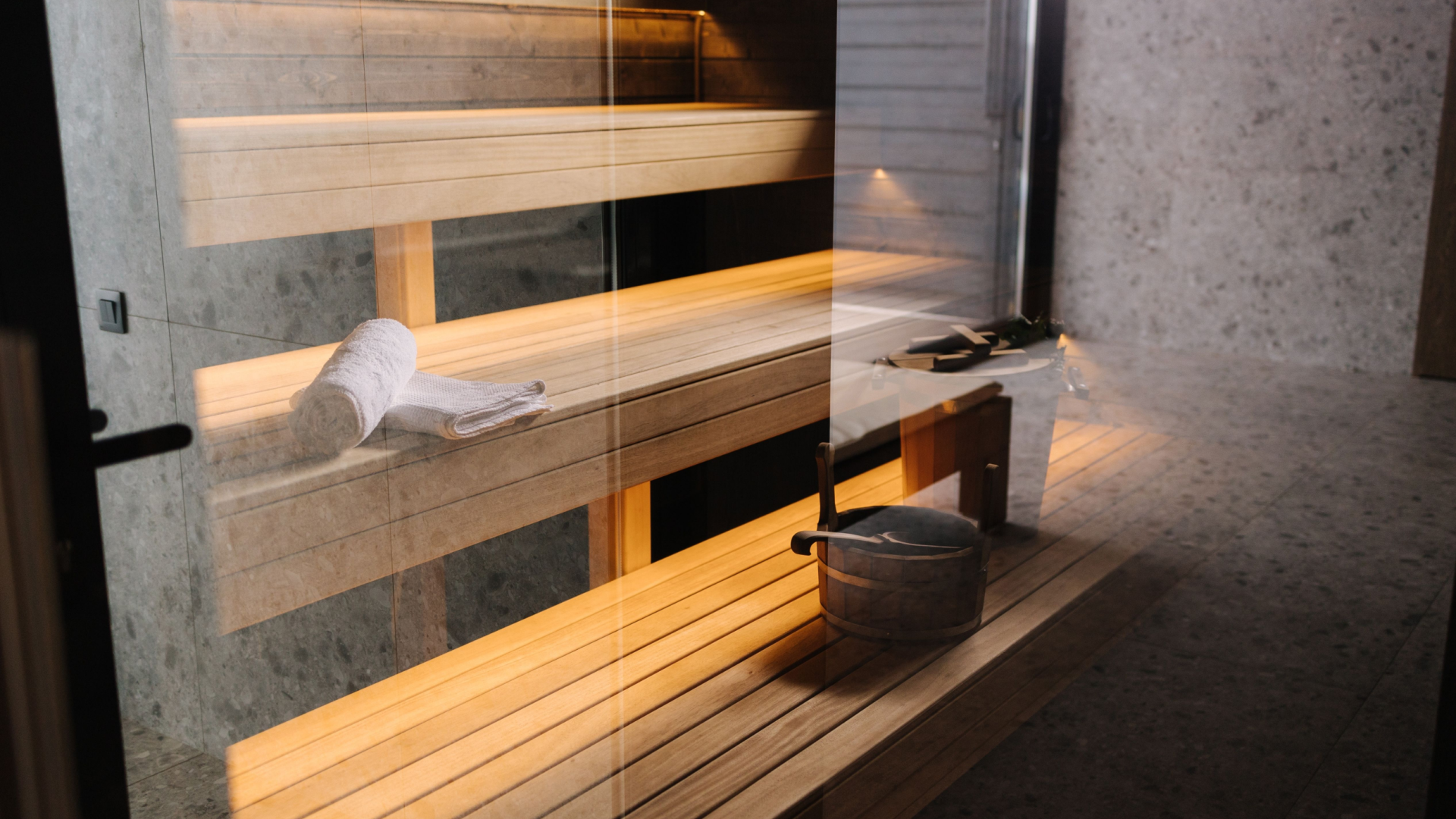
In higher-end properties, the gym and spa are designed in proximity. After a workout, there is a natural progression toward recovery. Steam showers, dry saunas, and infrared panels are becoming common additions. Cold plunge tubs, once considered niche, now appear regularly in custom builds.
These spaces are no longer improvised. Ceiling heights, ventilation systems, and acoustics are planned carefully. Natural light, where possible, is prioritized. When below grade, lighting systems are programmed to mimic circadian rhythms.
The goal is not simply fitness. It is restoration.
The Advanced Suite: Dedicated Wellness Floors
At the uppermost level of the market, wellness becomes architectural.
Entire lower levels are devoted to health and recovery. Salt therapy rooms. Red light therapy chambers. Contrast therapy circuits combining sauna and cold immersion. Private treatment rooms for massage or visiting practitioners.
Some homeowners incorporate meditation lounges with integrated sound systems and concealed technology. Others add indoor pools designed for hydrotherapy rather than recreation. Materials shift toward limestone, oak, and textured plaster to soften acoustics and absorb light.
These are not decorative amenities. They are environments built for daily use.
Designing for Use, Not Display
The most successful wellness spaces are not built as checklists.
They function because they are intuitive. The transition from gym to steam room feels seamless. Towels are within reach. Lighting adjusts automatically. There is space to sit, cool down, breathe.
Wellness at home works best when it feels inevitable rather than impressive.
As conversations around longevity and preventative health continue to evolve, buyers are thinking differently about square footage. A rarely used formal room may now give way to a recovery suite. Entertaining remains important, but personal well-being has moved higher on the priority list.
In today’s luxury market, a home that supports health is not excessive. It is strategic.
The extent to which that strategy unfolds depends entirely on the homeowner. For some, it is a beautiful bathroom and a quiet corner to stretch. For others, it is an entire floor dedicated to performance and recovery.
What was once a bonus feature has become, for many, essential infrastructure.

